Early Friday morning on Highway Atitalaquia Apaxco, Texas community in Tepeji del Río, Hidalgo, State Police detained 13 people suspected of belonging to the criminal group 'The Knights Templar.' According to the secretary of Public Security, Alfredo Ahedo, the arrest was achieved after a chasing the suspects who were traveling in three vans. Soon supported by the municipal police Tepeji River, criminals were rounded up and subsequently detained before being transferred to the city of Pachuca, while being closely monitored by the Mexican Army. The suspects, 12 men and one woman, mostly originating in the Federal District and the State of Mexico were made available to the Federal Public Ministry. Additionally they seized three trucks and rifles.
Another version:
The Secretary of Public Safety Hidalgo, Alfredo Mayorga Ahedo confirmed the arrest of 13 alleged members of the criminal group "The Knights Templar", who had been operating in Tepeji del Rio, Hildago. Thursday night elements of the Security and Investigation Agency Group of Tepeji del Rio, managed the arrest of 13 people on Atitalaquia - Apaxco, crossing to the town of Texas. Detainees were traveling in three vehicles, a white Camaro and two trucks-a light green pick-up and black pick-up. Both trucks were speeding. They ignored the official warning lights by authorities and continued accelerating. More units from the state of Mexico joined the chase. Two kilometers further on, police forced them to stop but they were subjected to verbal threats and intimidation from the criminals. They said, "we're "Knights Templar", threatened to kill them. Then the police proceeded to arrest them.
They are identified as: Gabriel Ruiz Vazquez 31, con domicilio en calle cerrada 5 de Mayo, colonia centro Chalco Estado de México Leopoldo Sánchez Torres 45 calle niños héroes numero 5, colonia Juárez, Apaxco Estado de México, Marcelino Anaya Luna 36 , calle 1, numero 36,Estado de México, Netzahualcóyotl Estado de México, Juan Pablo Rojo Orozco 34, con domicilio en calle Bugambilias número 9, manzana 173, Chalco Estado de México Enrique López Ibarra 41, calle pino numero 21, Lomas de Zaragoza, delegación Iztapalapa, Distrito Federal
Gustavo Delgado Alvarado 32, avenida Industrial s/n, colonia la Estación municipio de Apaxco Estado de México German Morales Ortiz 37 años calle Acapulco s/n, el tablón, municipio de Atitalaquia Estado de Hidalgo
Luis Enrique Cruz Rodríguez,19, calle Emiliano Zapata numero 6, colonia centro, municipio de Apaxco Estado de México
Fermín Ángeles Ramírez,48, calle articulo Miguel Hidalgo numero 2, colonia el Refugio, Atitalaquia Estado de Hidalgo Gil Alfredo Martínez Salvador 45, avenida Cuauhtémoc s/n, colonia Pueblo Nuevo, Tequixquiac Estado de México Víctor Elizalde Márquez 23, Avenida Juárez sin número, colonia Loma Bonita, Apaxco Estado de México Nicolás Cano Álvarez 45, calle Aquiles Serdán numero 34, colonia Loma Bonita, Apaxco Estado de Mexica Natalia Mendoza González, 27 calle Francisco I. Madero numero 30, colonia centro Apaxco Estado de México.
A series of "narcobanners" was displayed yesterday morning in various points throughout Monterrey, where supposedly the "Gulf Cartel threatened Los Zetas."
Also, unofficially, it was mentioned that a person was caught red handed while spreading one of the blankets. An unofficial state government source said there were at least six blankets hung on various pedestrian bridges on the avenues Garza Sada, Rómulo Garza and Miguel Aleman. They were entitled them "Nuevo Leon is CDG Territory."
A photo posted on social networks showed the text that said: "We do not want kidnappers extortionists thieves, murderers of innocent people. All equals Zetas ".
The message indicates that the problem is solely between the cartels and not the government or the people.The blanket says CDG is looking for tranquility in the state and they will finish up with rivals.
The state government did not provide information, in accordance with its new policy of preventing the spread of cartel activity.The report placing several blankets in different parts of the metropolitan area, mobilized police forces in the municipalities of San Nicolas, Guadalupe, and South of the city of Monterrey, where uniformed Civil Force and elements from the State Investigation Agency arrested a man, when he was caught red-handed trying to place a blanket over the footbridge of Eugenio Garza Sada Boulevard and Acapulco.
The man, aged 20 to 25 years, with another accomplice, was pursued but eventually fled. Dozens of police officers mobilized and immediately withdrew place.The rest were located Miguel Aleman Avenue and Romulo Garza, Ruiz Cortines, and Los Américas, as well as Eugenio Garza Sada and Alfonso Reyes.
(April 11) In Houston DEA detained seven members of the Gulf cartel.
Three of those were alleged leaders of the Gulf Cartel. César Álvarez Barrera, Juan Javier Correa y Gerardo Treviño.
the detainees distribute drugs from Houston, Chicago and Atlanta.
The operation coordinated by the DEA secured some 5,000 kilos of drugs from two residences Javier Peña spoke as special agent in charge of the DEA Houston Division in Texas
"Those they arrested today are heads that give the drugs coming from the Mexican drug cartel, Cartel del Golfo, McAllen to the area of Beaumont Houston and from here they're sending it to cities as Atlanta and Chicago. They arrested seven and they're looking, I believe three of 4 more persons" Televisa
NarcoBolo 75 kilos of meth, 10 kilos of cocaine and two kilos of heroin 3 dozen charged with trafficking drugs through Austin By Jazmine Ulloa Central Texas law enforcement officials say they have busted two elaborate drug distribution networks based in Austin, one of which had ties to a powerful Mexican drug cartel and was operating out of an East Austin body shop.
JT Body and Paint 1202 Salina St owned by Jess Trevino
In a press conference Thursday morning, U.S. Attorney Robert Pitman hailed the efforts of the multi-agency task forces that brought the organizations down, saying collaboration played a strong part in dismantling the illicit activities. Authorities have seized more than 75 kilos of meth, 10 kilos of cocaine and two kilos of heroin through the course of the investigation at JT Body and Paint. More than 20 people were arrested Wednesday, including the owner. Four have not been detained, officials said. Greg Thrash, resident agent in charge of the Austin DEA office, said the group was a cell of the Mexican drug cartel Knights Templar and that members were taking orders from bosses in Mexico.
Greg Thrash, in charge of the Austin DEA office
The U.S. Attorney's Office for the Western District of Texas said Jose Rodriguez-Granados was the Austin head of a large Mexican-based trafficking organization associated with the Knights Templar. A redacted version of a federal indictment handed up by a Central Texas grand jury and unsealed Wednesday shows that nearly 30 people are facing drug and money-laundering charges in connection with distributing meth and heroin from October 2011 until this month. Four names have been blocked out. Using hidden compartments in cars, law enforcement officials said, the organization moved meth and cocaine to one of the business at 1202 Salina St., which is owned by defendant Jess Trevino. The shipment would then be prepared for transport to distributors in Dallas, Oklahoma City and other cities in other states, authorities said.
This is the second East Austin body shop to be busted this year. Investigators say a major criminal distribution network based out of G.R. Custom Body and Paint at 4826 E. Cesar Chavez St. operated in much the same way. In that scheme, court records show that owner Hugo Castillo Gaspar, who was arrested, collected cocaine from suppliers in Mexico and the border region and then dispensed the goods to wholesalers in Austin and across the United States. Authorities said they recovered up to $200,000 in cash, $400,000 in other assets, methamphetamine and more than a dozen weapons. 2011-Why La Familia Targets Austin In unrelated investigation, authorities arrested 14 people who they said were part of another criminal network delivering cocaine and meth to Austin from the Rio Grande Valley. Once in Austin, the drugs would be distributed locally and outside of Texas, police said.
The drugs were coming from Mexico, authorities said, but the group did not have ties to any one Mexican cartel. Sources: Statesman, Keye, KXAN
Why Did Blog del Narco Became Mexico's Most Important Website?
The power of the drug cartels forced Mexico’s media into silence—Blog del Narco filled the void.
A woman is held back by another woman as she reacts to the killing of several people at a crime scene in Monterrey on August 29, 2012. Gunmen shot dead three men and a woman and left graffiti on a wall at the crime scene reading "Commander X20, at your orders, (signed) CDG (Gulf Cartel)", according to local media.
In 2010, the birth year of the popular and controversial website Blog del Narco, Mexico’s tumultuous drug war reached a turning point. Monterrey, an economic engine of the country and once famously known as the safest city in Latin America, was engulfed by narco blockades and gun battles. In the neighboring state of Tamaulipas, the leading gubernatorial candidate was assassinated, and the border cities of Camargo and Mier became ghost towns.
In the first two months of 2010, eight journalists were kidnapped in the border city of Reynosa. The offices of news organizations across northern Mexico were attacked with grenades and strafed with gunfire. Only two of the kidnapped reporters survived. When the reporters returned to their newsroom at El Milenio in Mexico City, their editor Ciro Gomez Lleyva wrote what was essentially the obituary for press freedom in his country. “In more and more regions of Mexico, it is impossible to do journalism. Journalism is dead in Reynosa, and I have nothing more to say.”
As Mexico’s media outlets stopped reporting on the cartels and the government remained silent, Blog del Narco, launched in March 2010, began to fill the void (Read Rory Carroll’s exclusive interview with Blog del Narco’s founder). The blog featured raw photos and videos of executions, and gun battles uploaded by anonymous contributors. Within months Blog del Narco was one of the most visited websites in Mexico with three million monthly visitors. The blog documented the drug war in all its horror: photos of decapitated heads, mutilated torsos and other stomach-jarring acts of violence committed by organized crime to induce terror among the population.
Frightened and curious Mexicans read Blog del Narco to understand what was happening to their country “We were living in some kind of low intensity war,” said Guadalupe Correa-Cabrera, an associate professor at the University of Texas at Brownsville who studies organized crime in her native Mexico. “We had never seen houses burnt, people massacred like this before. It was deeply frightening.”
Anonymity became the only safeguard for freedom of expression. Blog del Narco posted every grim corpse photo and every gory account of assassination without attribution. It was unclear whether the stories were ripped from other websites or were original reporting. And it seemed like no moderator existed. “The site was a mess,” Correa-Cabrera said.
But everyone read it anyway. It was gruesome, but the violence needed to be documented, because it was happening. “If anything, Blog del Narco is an account of the facts. Proof that it happened. Because if we do not acknowledge what is happening in our country, then we can never change it,” Correa-Cabrera said.
The cartels tried to dispatch Blog del Narco much like they had Mexico’s other media outlets. The blog suffered hundreds of cyber attacks. Anonymous and unsubstantiated rumors began to circulate that the site favored one cartel over another. In 2011, the website suffered a debilitating cyber attack and was offline several days before it switched servers. Then a man and woman were killed and hung from a bridge in the border city of Nuevo Laredo with a sign warning that they had been killed for working on anonymous websites like Blog del Narco. “This is what will happen to all the Internet snitches. Be warned, we are watching you, Sincerely Z [Los Zetas].”
Since the dark days of 2011 and the crippling cyber attack, Blog del Narco has redoubled its efforts. This week the website’s moderators released their first book “Dying for the Truth: Undercover Inside the Mexican Drug War,” published by Feral House. In the book, written in Spanish and English, the anonymous authors of the blog document the dissolution of their country in 2010 by starting with an apology, “We are well educated and don’t tend to curse, but we’re going to say this because it’s the way it is: Our country is fucked. It has been for a long time.”
The book is divided into short chapters that report month by month the bloody battle for territory by organized crime during 2010 and the first two months of 2011. The photos are as gruesome and as graphic as they are on the website. The text gives concise explanations of events, including transcriptions of narco messages left behind on the bodies.
Nothing in the book is attributed. Some of the chapters are remarkably detailed. In one chapter titled “Gubernatorial Candidate is Murdered with His Team Members,” the authors explain how Rodolfo Torre Cantú, Tamaulipas’ leading gubernatorial candidate for the Institutional Revolutionary Party, or PRI, was ambushed in June 2010 by Los Zetas cartel outside the state’s capital. The chapter describes how the hit men slept in a motel near the ambush site and how the cartel’s leader at the time, Heriberto Lazcano Lazcano, personally supervised the massacre of Torres and his campaign team. Three graphic photographs in the book document the massacre.
Three years later, the gubernatorial candidate’s murder, like thousands of others in the last six years, has yet to be investigated by Mexican authorities. The country’s new president Enrique Peña Nieto, anxious to suppress the growing conflict, is increasingly adopting a policy of silence. Gone are the press conferences touting the deployment of more troops or the capture of a drug kingpin that were common under the previous president, Felipe Calderon. Attacks against the press are once again on the rise and recent gun battles raging across northern Mexico are scarcely reported by the media.
Someday, when the violence ends, historians won’t have much information to help explain the bloodiest era in the country’s history since the Mexican Revolution. What they will have is Blog del Narco.
Terror of Tierra Caliente Continues with hardly a whisper
April 1, Mexi Rojo reports something went unnoticed on Wednesday, March 27 and no media reported it other than an occasional tabloid report nor were there any citizen notices until now:
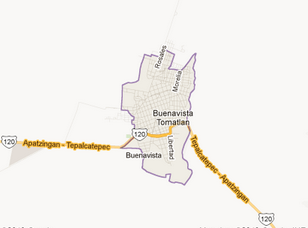
In Apatzingan limits and Buenavista, Tomatlán a convoy consisting of approximately 30 VANS was confronted by an Armed Forces (Federal) helicopter killing at least 10 Caballeros Templarios, the exact number is unknown. Residents of the region confirmed it was Kiki's Plancarte's people carrying millions of dollars which was the reason for the magnitude of the convoy.
The clash started between 5:30 and 6:00 pm last Wednesday in the Buenavista area of the state of Michoacán . From the air Federal Police located the 30-vehicle convoy pursued them for almost an hour and finally responded to fire coming from land.
Government sources revealed a Federal Police helicopter was involved in this confrontation. From the air also observed several of their opponents carrying away accomplices who were badly injured or dead. Communal authorities have confirmed at least 10 were killed, but whether the facts were made known to the Attorney General of Michoacán is not known.
From March 22, there have been three clashes between elements of the
federal police and hitmen of organized crime in the town of Buenavista, a
plaza head died last Friday On 26 March, in the
same Tierra Caliente area of Michoacán there was another confrontation between federal police
and gunmen, killing one officer injured and three criminals died.. According to police around 5:30 am on Tuesday, gunmen and federal police fought each other on roads, exchanging gunfire in the towns of Pinzándaro and La Huina, the scuffle lasted just over an hour. During the shooting the Federal Police managed to shoot down three gunmen in the service of organized crime. Buenavista, Buenavista,Tomatlán and Apatzingan are considered red zones by the Ministry of Public Security because of their high crime rate due to organized crime group and civil guards. On the occasion of Easter, 1,700 members of the Federal Police moved in 400 patrols in the Michoacan territory as part of the operation to keep the holidays safe each year. The Samana Santa vigilance operation started March 23 and is scheduled to end on April 6 carried out by citizen aid program. Rednoticias
The government of Enrique Peña Nieto is conducting a low profile war in Michoacán.The Army is trapped between the Guardia Civil and the drug cartels. Since the withdrawal of the Federal Police in the state, soldiers try to stop the violence and enforce the law but encounter organized crime groups such as Los Zetas, The Knights Templar and New Generation Jalisco Cartel, who are immersed in the fierce fight to control the plaza and who ruthlessly murder as they see fit.
MEXICO CITY - The strategy of silence of the government of Enrique Peña Nieto left the death of Dionisio Loya Plancarte in the shadows. Loya Plancarte was one of the leaders of the Knights Templar and a historic leader of organized crime in Michoacán.
Known as El Tio, Loya Plancarte was killed at the hands of the army in an alleged EPN government retaliation over the disappearance of three elements of Estado Mayor Presidencial. Presidential Guard.
Sent from Mexico City, the military disappeared between neighboring municipalities Apatzingan and Buena Vista Tomatlán, home turf to bastions of La Familia Michoacana and its spinoff, The Knights Templar.
Information obtained by Proceso indicates that the Army conducted night operations in the of both communities. Until that moment the military had been passing through the main highways but now entered communities.
During one of these raids, in the early hours of Saturday the 16th, they faced a group of armed civilians in the community of El Alcalde, in the town of Apatzingán. According to state police agencies and subsequently quoted by local journalists, five military persons were killed in the confrontation.
The incident occurred around two in the morning when a military convoy of three vehicles faced men traveling in SUVs who refused to disarm. Some versions mentioned that after the fight there was a strong military mobilization, even by air.
However, the Ministry of National Defense was silent, although the death of El Tio was the most important blow to Knights Templar since the death of Nazario Moreno González, El Chayo, in a shootout with federal police in December 2010.
With the demise of El Tio a head of the Knights Templar, all who remains are Servando Gómez Martínez, La Tuta, and Enrique Plancarte Solis, El Kikin, or El Kiki who was awarded international relations with chemical precursor suppliers (especially China) for the production of synthetic drugs.
In Buenavista there are many small hidden roads that lead to former homes and properties of El Chayo, El Tio and El Chango Mendez, who the leaders of La Familia Michoacana detained since June 2011
La Tuta
February brought numerous scenes of clashes, blockades and burning vehicles. Violence erupted on the 11th when elements of the Army faced a group of civilians, also on Wednesday the 13th again on the afternoon of Friday 22. It occurred, south of the town in the community of Santa Ana Amatlán, adjacent to El Terrero and Catalinas. In the same area gunmen torched a gas station and a lemon packing facility.
The Army also kept silent about the humiliated wrong it endured a few days earlier, between the night of Monday 11 and Tuesday 12 of March, a group of soldiers belonging to the 43rd Military Zone based in Apatzingan was held by civilians in La Ruana, tenure of Felipe Carrillo Puerto, in the town of BuenaVista, Tomatlán.
A recorded video of the retention of unarmed military surrounded by people circulated widely in the press and social networks.
The retention of 20 or 40 military was to demand the release of 51 community guards detained and accused of having links to the organized crime, and forming a "Police community" in that population.
It was assumed the New Generation Jalisco Cartel (CJNG) and the Knights Templar are behind the armed civilian groups in Buenavista and Tepalcatepec The Army entered the two municipalities and detained members of both organizations.
Armed civilian groups were at their best this past February in tierra caliente region of Michoacan. Soon the civil guards emerged in Cheran, Paracho and other areas of indigenous inhabitants of Northern Central State. They said they were there to deal with organized crime.
Other "civil guards" have emerged not only around the municipality of Los Reyes, but they've also been reported in the port of Lazaro Cardenas, a strategic transport point of illegal drug and precursors substances both from Mexico as well as from Asia.
Acapulco y Coyuca Community Police Multiply
The area surrounding the port has been a hot area of contention for Los Zetas cartel, which in the past decade, as the armed wing of the Gulf cartel, gave paramilitary training to the organization known as The Company later named La Familia Michoacana. Now, the Knights Templar reorganized itself in the area as part of their confrontation with the CJNG and Los Zetas.
This month has been difficult for the Army in Michoacan, after the government of Peña Nieto withdrew the Federal Police, that had a strong showing in the state during the presidency of Felipe Calderon. It's noted that the corporation took a particularly heavy casualties at the hands of La Familia Michoacana during the execution of El Chayo in 2010.
On Thursday , the army arrested 34 people who reported being part of community policing for drug crime. However, the Attorney General's Office (PGR) considered them members of a criminal organization and charged 31 of them for carrying weapons exclusively used by the Armed Forces -AK47 rifles, AR-15 and 5.7-caliber pistols-. The other three were minors and were referred to juvenile facilities.
They were transferred to federal detention of Veracruz, Mexico State and Tamaulipas. Among them is a person identified with the name Edgar Antonio Rojo Lara, supposedly, CJNG lieutenant in Michoacán.
Detainees insisted that they were guards belonging to Buena Vista and Tomatlán community defense organized against extortion and collection of rents by the Knights Templar. Military secured weapons from those member of these organizations.
Shortly there after, on Monday 11, the Army arrested 17 people, including two minors, with weapons, once again exclusively used by Armed Forces in the same community of La Ruana, midway between the towns of Buenavista and Apatzingán. During the eighties and nineties this area was well known as a major producer of marijuana.
After the second capture, the military retention occurred . In the video that circulated, the kidnappers could be heard criticizing the Knights Templar and La Tuta. The state government and the military intervened and they were released the next day. he state attorney, Placido Torres Pineda, "Consequences didn't go beyond that...in his mind" The Department of Defense was silent.
Milenio: Mariana Benítez Tiburcio, States Attorney for legal and International Affairs revealed that 3 of the 34 people arrested in March for belonging to a self-defense Michoacan group have criminal records. According to PGR one allegedly belongs to the New Generation Jalisco Cartel
At first he identified himself as Víctor Ibarra Guerrero, later he said his name is Edgar Antonio Rojo Lara, who was part of a preliminary investigation in Sinaloa and presumably is CNGJ.
In an interview with Joaquin Lopez-Doriga for Grupo Fórmula, Benitez Tiburcio said the securing of the subjects, as well as the high-powered weapons, were achieved by a joint operation which involved Mexican Army personnel in conjunction with the Attorney General the Republic.
The legal Assistant attorney said the "the paramilitaries were arrested away from the people they're supposed to protect.
"The state is working to see if there is any link between the paramilitaries and narco"