Translate

Thursday, September 12, 2013

Three PRD Mayors Killed in Separate Incidents in Less than 36 hours

Three local members of PRD were killed; one in Oaxaca and two in Michoacán lost their lives in separate attacks; three ex-mayors in less than 36 hours.

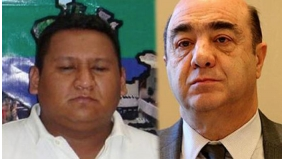
On Tuesday night, September 10,  Everardo Hugo Hernandez Guzman was killed. He was the elected mayor in the municipality of San Andrés, Oaxaca, and a member of the Section 22 National Coordinator of Education Workers (CNTE).

The local MP also PRD was having dinner at a small business located in No. 118 Calle Juan de la Barrera  in Agustín Melgar neighborhood in the suburban municipality of Santa Cruz Xoxocotlán when he was attacked.


According to information from the police, Hernandez Guzman was shot four times at close range. After the attack, Hernandez Guzman was taken while he was still alive to the the civil hospital "Aurelio Valdivieso" in the city of Oaxaca, where he lost his life.


Less than 24 hours later, four men hacked to death  local Michoacan MP Osbaldo Esquivel Lucatero and wounded a journalist who apparently were talking on the side of a road.


Esquivel Lucatero  stopped with his brother to meet with a journalist outside of Morelia, the capital of Michoacan. As they spoke, four men in a vehicle stopped and attacked the legislator and journalist.


The assemblymen's brother took them to hospital where Esquivel died . The journalist was seriously injured.


Osbaldo Esquivel Lucatero was ex-mayor of Buenavista Tomatlán, a town located in one of the most violent areas of the state.


Esquivel Lucatero was arrested in 2009 in an operation against  30 state of Michoacan municipal officials who were accused by federal authorities of protecting the La Familia cartel. The charges were later dropped.


Javier Sagrero Chavez, former Mayor of Quiroga, Michoacan, was shot to death September 13, 2013. Preliminary reports indicate that the PRD politician received at least two gunshot wounds when he was in his office at Livestock Association of Quiroga, of which he was president.

The projectiles caused severe head injuries to the former mayor, who was still alive when was loaded into an ambulance to be transferred to the city of Morelia.

The former mayor died at kilometer 23, in the vicinity of Capula community.


Early reports indicate that the attack was accomplished by a man who entered the offices and shot at close range.

Sagrero Chpavez governed Quiroga  from 2005 to 2007, during the time of Governor Lazaro Cardenas Batel, PRD.

The murder occurs two days after Osbaldo Esquivel Lucatero. lawmaker local deputy of PRD was attacked by four men carrying machetes, while he was talking to a reporter at the Morelia-Patzcuaro highway, at the neighborhood of Hacienda del Valle.

Jaime Mares, Secretary General of the Michoacan government, confirmed the attack of former Mayor of Quiroga and his subsequent death. The state Attorney General began the first steps at the scene of the attack for the the start of the preliminary investigation.


Leer Más:


Source Animalpolitico,Reforma, Milenio

Wednesday, September 11, 2013

Mexico Details Irregularities in Freeing Rafael Caro Quintero


Embarrassing for Mexico, Infuriating for the US, Painful for Victims' Families


The Mexican court that freed drug lord Rafael Caro Quintero seriously violated criminal procedures by failing to quickly notify the Attorney General's Office, preventing it from acting to block the release, two of Mexico's highest-ranking legal officials said Tuesday amid meetings with U.S. officials

The Attorney General's Office is normally notified almost instantly of decisions like the ruling that freed Caro Quintero, said Mariana Benitez, assistant attorney general for international affairs. Caro Quintero, once notorious as one of Mexico's pre-eminent drug bosses, was set free by a federal appeals court on procedural grounds last month, 28 years into a 40-year sentence for helping orchestrate the 1985 killing of U.S. Drug Enforcement Administration agent Enrique "Kiki" Camarena, among other crimes.


That release embarrassed Mexican authorities and caused friction with U.S. law enforcement officials who had campaigned for years to punish Camarena's killers.


Benitez said the Attorney General's Office learned about Caro Quintero's release two days after the court ruling and nine hours after he walked free around 1 a.m. Aug. 9, at the same time the news was being reported by the press.


Attorney General Jesus Murillo Karam told reporters in Washington that the release involved "serious violations" of procedure, including the court's failure to wait 10 days to check that there were no outstanding charges against the person about to be freed.


The court, which found that the charges originally should have been tried in state instead of federal court, also clearly should have referred the case to a state judge instead of simply freeing Caro Quintero, Murillo Karam said. The Attorney General's Office has appealed the decision but says that it has no idea where Caro Quintero has gone, making the proceeding largely irrelevant.


"To me — and this is how we describe it in the appeal — the court's decision appears to be absurd and illogical," Murillo Karam said.


U.S. officials have said they suspect the three judges on the appeals court in the state of Jalisco were bribed to let Caro Quintero go. A spokesman for the court system did not immediately respond to a request for comment Tuesday.


Attorney General Eric Holder complained to Murillo Karam about the Caro Quintero case during a series of meetings the Mexican official held with law-enforcement officials in Washington.


Murillo Karam said the Mexican court system, not his agency, was in charge of investigating potential irregularities. He said his office has assigned a special team to pursue a new U.S. request for Caro Quintero's arrest, filed after the drug lord was released.


"Unfortunately, we don't know where he is at this moment," he said. "If we knew where he was, we'd have him in custody."

Prison Transfer Rejected for 'La Reina del Pacifico"


A federal judge ultimately denied Sandra Avila Beltran's request to be relocated from the federal prison in Tepic, Nayarit, where she was previous to her extradition to the US, the woman's state prison in the state of Jalisco, 

On Aug. 15, 2013,  the defense of La Reina del Pacifico represented by Jesus Jaime Montiel, appealed before the Fourth District Court of Amparo in Mexico City (798/2012) but the court did not issue any resolution. When Avila Beltran was repatriated from the United States on August 20, 2013, her lawyers tried to prevent her entry into the federal criminal facility. But immediately her upon arrival she was arrested in Mexico City airport, she was transported to Federal Social Rehabilitation Center No. 4 of Tepic, Nayarit instead of being taken to the State of Jalisco women's prison. 

Her defense tried to reverse this decision arguing that Avila Beltran should not be in a federal prison and because she is not being prosecuted for organized crime.

However, the list of Court of Protection Agreements reported today that  Sandra Avila is to be denied relocation to another prison, so she will have to remain in prison in the federal facility in Tepic.

Diariodeveracruz, Universal

Wednesday, September 4, 2013

Enrique Peña Nieto Boasts about Decline in Homicides......

Even though Zeta Weekly on August 24 provided their Government Report to EPN

ana.langner @ eleconomista.mx 

wrote since President Enrique Penã took office in December 2012, he has stressed his priority eliminating crimes that most affect citizens, but violent crimes such as kidnapping and extortion increased in the first quarter of 2013, said Maureen Meyer, senior coordinator of Central America Program of the Washington Office on Latin America (WOLA). The researcher of this American organization explains that the Mexican government's strategy regarding communication on the problem of organized crime in the country has been silent on strategies to combat and focus the discourse on economic growth. Despite this, he warns, violence remains at levels "unacceptably high."


After reaching a peak of about 68 murders per day in 2011, the homicide rate dropped in 2012 to about 50 murders a day. This trend has continued throughout the first quarter of the administration of Peña Nieto.

Meanwhile, Meyer refers, the Mexican government claims a 17% reduction of murders related to organized crime (intentional homicide) in the first quarter of 2013 compared to the previous quarter and a decrease of 14% compared to the first quarter of 2012.

This would be a very significant reduction, however, the overall death rate dropped to a much slower rate: 8.5% from the previous quarter and 7.8% over the same quarter of 2012. Therefore, the WOLA analyst concludes that it is likely that the government has applied different criteria to determine which murders are classified as "related to organized crime."

He explained also that although violent robberies have declined in recent years, the rate of kidnappings and extortion increased in the first quarter of 2013, "both are in near-record levels."

The public debate on violence in Mexico has changed dramatically in the last year, said Maureen Meyer. The media coverage of Mexico in the United States has focused on the economy and has clearly been more positive.

In Mexico, the coverage of violence and organized crime has dropped dramatically and the terms "organized crime" and "drug trafficking" appear much less frequently in the main media.

But the lack of information on government actions to combat organized crime causes lack media to report official data on crime and as a result, people tend to rely more on social channels to get information about situations violence in their communities.

A week before the state of the Union address, Peña Nieto began warming up public with a little boasting about the  decline in homicides.

In the State of the Union Address, President Enrique Peña Nieto said there had been a 13.7 percent drop in the murder rate between January and August of 2013 compared to the same period the year before. He attributed this to improved coordination between different law enforcement agencies.

Murders linked to organized crime had dropped 20 percent, he said, highlighting even greater drops in some of Mexico's most violent states -- Tamaulipas (36.2 percent), Chihuahua (37.2 percent) and Nuevo Leon (46.5 percent), reported El Diario.

The most recent report from the government's National System of Public Security revealed there had been a total of 12,595 recorded murders since Peña Nieto took office, reported Animal Politico. The report also recorded the seizure of more than 80 tons of drugs, mostly marijuana and cocaine, alongside approximately $4 million in cash and 982 weapons.

InSight Crime Analysis
While undoubtedly a good thing that less Mexicans were murdered in the first half of 2013 than 2012, the unfortunate fact remains that Mexico's murder rate is still extremely high. Even if Peña Nieto's administration succeeds in cutting the murder rate in half, by the time the mid-term elections come around more than 20,000 people will have been killed under his presidency.

Criminal violence has tended to show a gradual downward spiral in recent years, but progress is very slowindeed. Different government figures often contradict each other, making it impossible to know what is accurate, and the categorization of murders according to whether they are related to organized crime or not is problematic, again making the information hard to trust.


Meanwhile, almost all murders go unsolved, which points to the major reforms required in the judicial and security forces if truly tangible improvements in citizen safety are ever to be achieved.

Sunday, September 1, 2013

Avenger of raped women in Ciudad Juarez!

Diana the Huntress of Bus Drivers
CHIHUAHUA, Chih. - In an email sent on Friday to an information portal of Ciudad Juarez, an alleged assassin who is taking revenge against public transport drivers because she and other women have experienced sexual violence.

Diana la cazadora de choferes (Diana the Huntress of drivers), as she calls herself, complained that bus drivers have outraged various maquiladora employees who work the night shift after they board buses to travel to their homes after work.

She warns that she will avenge the victims because the authorities do nothing to protect workers: "They think because we are women, we  are weak and  yes, we can be, but only up to a point, although we have no one that we can can count on to defend us and we need to work late into the night to support our families. We can not keep silent about these acts of violence that fill us with rage ... " says the email sent to the news portal.

According to reports from the authorities, on Wednesday 28 and Thursday 29, two public bus drivers were murdered in Juarez by a woman.

In the first case, a blond woman, dressed in black, shot and killed  a public bus driver.

The murder occurred at 7:45 am in the Partido Romero neighborhood when the attacker stopped the bus on Ignacio de la Peña Street.
The driver, identified as Roberto Flores Carrera, 45, stood up and opened the door for the woman. As she was boarding the bus, she drew a pistol and shot him in the head in  front of the passengers.


In the second case, a person with the same characteristics as the person involved in the previous incident, boarded the bus and killed Freddy Zarate, also 45, as he was driving by the front of the campus of Universidad Autónoma de Ciudad Juárez. Both victims had several years of experience as public transport drivers.


The Attorney General's Office reported that so far they have no clues about the murders.


The email of Diana the Huntress of bus drivers added: "My colleagues and I suffered in silence but we can not be silent anymore, we were victims of sexual violence by drivers covering the night shifts of the factories here in Juárez and although many people know what we suffer, nobody does anything to defend or protect us. so I'm an instrument to avenge several women who may have seemed weak by society, but we're really brave and they do not respect us, and will not give us respect until we take it into our own hands, Juarez women are strong.


In both cases, witnesses reported that the murders were done by a woman about 50 years old, brown hair and dyed blonde, with a scarf or cap, wearing blue jeans and black shirt.

Riodoce, Sin embargo

Friday, July 26, 2013

New Generation Jalisco Cartel Leader Captured In Mexico

NarcoBolo:

Some recent noteworthy captures in Guadalajara and Celaya:

Written by Claire O'Neill McCleskey, for Insightcrime, Monday, 22 July 2013
and Borderland Beat for the Celaya captures


In news overshadowed by the capture of Zetas leader Z40, Mexican officials announced the arrest of Jalisco Cartel – New Generation (CJNG) leader Victor Hugo Delgado Renteria, alias “El Tornado” in Jalisco state.

Victor Delgado and 

Attorney General Jesus Murillo Karam 

On July 18, Mexico‘s Attorney General, Jesus Murillo Karam, announced that federal forces had detained Delgado on July 10 in Guadalajara, reported the New York Times. Delgado is accused of killing 12 drug dealers whose decapitated bodies were found in Yucatán in 2008.


Another CJNG member, Domingo Medina Mogel, was also arrested, reported El Economista. Both Delgado and Medina were apprehended on March 21, 2010, but were released months later.


Much like with Z40′s arrest, Mexican officials were low-key about announcing Delgado’s capture: the Attorney General waited over a week to tell press that Delgado had been detained, and he declined to offer any details. Although the capture of two major drug traffickers in such a short time is a coup for Peña Nieto’s administration, the president has continued to publicly emphasize that his goal is to reduce violence rather than arrest kingpins.


In Jalisco, however, violence remains high. According to data from Mexico’s National Citizen Observatory, criminal homicides in Jalisco increased 6.2 percent in the first third of 2013 in comparison to the same period in 2012. This means that in the part of 2013, Jalisco had the third highest number of criminal homicides of Mexico’s 32 states, after Guerrero and Chihuahua.


A large part of this violence stems from the fact that multiple gangs are battling for control of Jalisco. CJNG, which is led by many of slain Sinaloa Cartel capo Ignacio “Nacho” Coronel’s former associates, is a regional gang allied with the Sinaloa Cartel, although in August state authorities announced the two groups may have split. In Jalisco and other states along Mexico’s Pacific coast, CJNG has fought against the Zetas and their allied local group the Milenio Cartel, as well as the Knights Templar (Caballeros Templarios), the remnants of the Familia Michoacana, and smaller local gang the Resistance.


Insightcrime and Borderland Beat


Thursday, July 25, 2013

Sandra Avila Beltrán-La Reina del Pacifico Sentenced to be Deported

NarcoBolo
Sandra Avila Beltrán-La Reina del Pacifico
Miami, Florida. - The Mexican drug trafficker Sandra Avila Beltran, known as "La Reina del Pacifico" or "Queen of the Pacific," was sentenced Thursday in federal court in Miami to 70 months in prison for advising another drug lord, but the judge counted her time already served in Mexico and she will be deported soon.

Judge Michael Moore sentenced Avila Beltran to 70 months in prison, five years and eight months in prison, but took into account the nearly five years of imprisonment which has already been served in Mexico as well as the over 11 months which she has been jailed in Florida since her extradition from Mexico last year.

Avila Beltran, 52 years old, was a prominent figure of the Sinaloa cartel, reached a plea deal so she was only convicted of a single charge: Advising a drug dealer to evade justice, referring to her former partner, Colombian Juan Diego Espinosa, aka "El Tigre", a key figure between the Sinaloa Cartel and el Norte  del Valle in Colombia.

"It's been  70 months since, September 28, 2007, the time she was imprisoned in Mexico, so starting next week  she could be released," said Stephen Ralls, Avila Beltran's lawyer.  Once she heard the statement,  "Queen of the Pacific," in a prisoner's beige uniform and leg shackles, smiled at the sentence.  She will leave under the orders from U.S. immigration services in the coming days then be deported to Mexico. "We hope this process will take about a month," said the defense attorney in spanish working in Arizona.


Source: OEM